Article · For law firms
Psychosocial hazards: what NSW law firms need to know.
From 1 July 2026, failing to follow the Code of Practice on psychosocial hazards can be prosecuted in NSW. Here is what that means for firms, in plain English.

What changed
Codes of Practice now carry legal weight.
Under a new section 26A of the Work Health and Safety Act 2011 (NSW), employers must either follow an approved Code of Practice or show that their own approach gives an equal or higher standard of health and safety. This applies from 1 July 2026.
Before this, Codes were guidance. A firm could be criticised for ignoring one, but not prosecuted for that alone. Now it can. Maximum penalties run from around $748,000 to $2.24 million depending on how serious the breach is.
What the Code asks
Identify, assess, control, review.
The Code on managing psychosocial hazards asks employers to find the hazards, assess the risk, put controls in place and keep checking them. In law firms the usual hazards are high workload and time pressure, low support, poor relationships, and exposure to traumatic material in some practice areas.
Two points matter most. First, firms must consult workers, not just write a policy. Second, the strongest controls change how work is designed: workload, staffing and supervision. Wellness apps, EAP numbers and resilience training on their own are not enough.
Where group work fits
Groups help firms consult and connect.
Facilitated group sessions are not a substitute for fixing workload. They are a practical way to do two things the Code asks for: hear honestly from staff about what is hard, and strengthen the support between colleagues that protects against burnout.
A counsellor-led group gives lawyers a confidential space to say what they would never say in a performance review. Firms get a clearer picture of the real hazards, and people leave with skills they can use the next day.
Want to talk about your firm?
3RDSPACE runs counsellor-led group programs for NSW law firms. See how it works on our law firm page, or get in touch.
See the law firm programSources: SafeWork NSW, Code of Practice: Managing psychosocial hazards at work; AHRI, NSW employers can now be prosecuted for breaching psychosocial risk obligations; Coutts Legal, NSW psychosocial hazard laws 2026. Published October 2026. General information only, not legal advice.
But where are the spaces to be human?
The most powerful tool for human wellbeing isn't an app, a podcast, a pulse survey, or a mental health day:
It's other people.
We bring structured group connection inside the spaces you already have because the most connected communities aren’t accidental…
they’re structured.
The most powerful tool for human wellbeing isn't an app, a podcast, a pulse survey, or a mental health day:
It's other people.
We bring structured group connection inside the spaces you already have because the most connected communities aren’t accidental…
they’re structured.
When 3RDSPACE runs inside your community, people don't just show up.
They come back
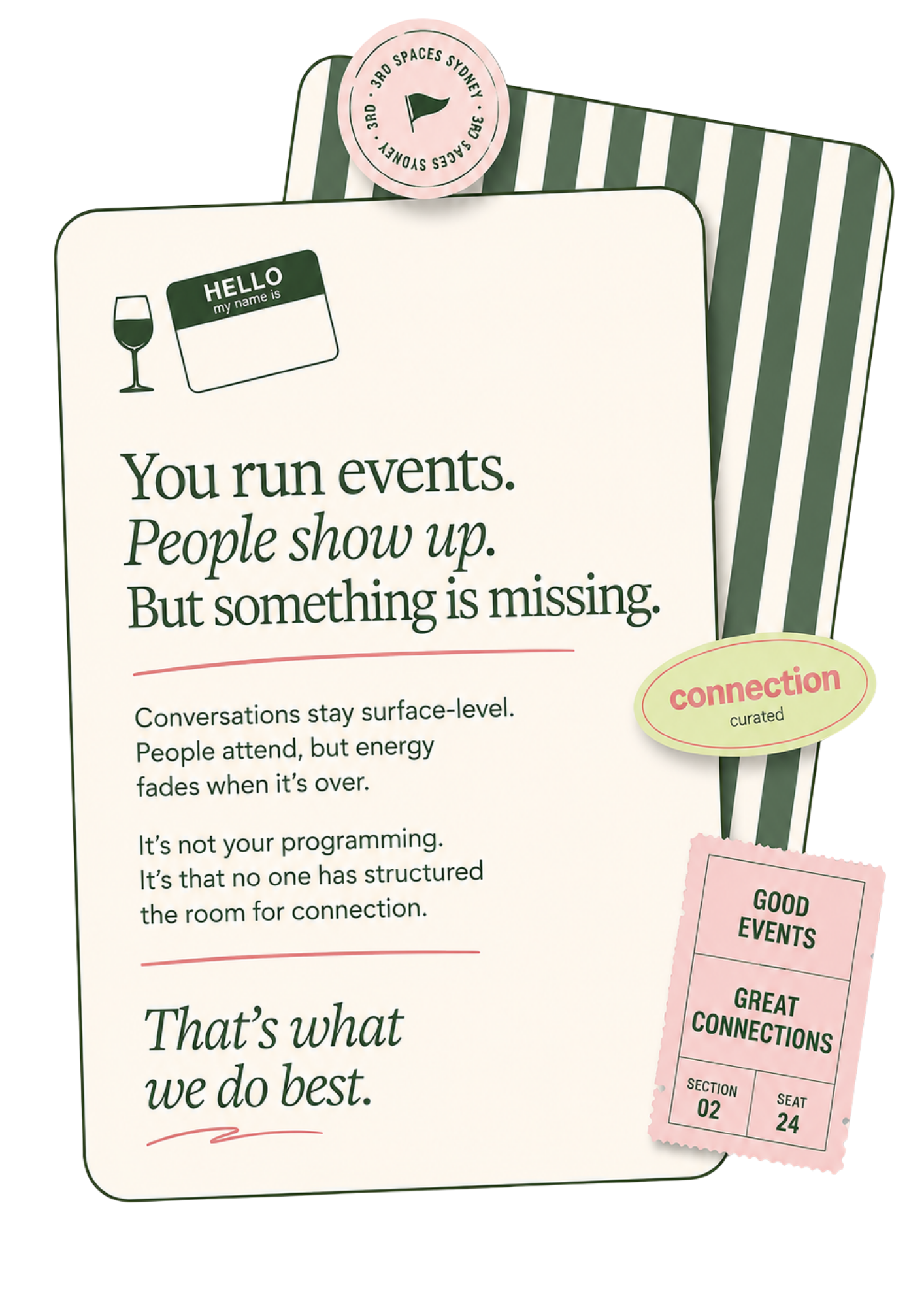
When 3RDSPACE runs inside your community, people don't just show up.
They come back
What residents told us after Third Space at Scape student accommodation, Semester 2 2026
95% felt safe and supported.
93% left more connected to the people around them. 79% feel more at home where they live. 4.7 out of 5 average session rating.
from 56 feedback forms
The most powerful tool for human wellbeing isn't an app, a podcast, a pulse survey, or a mental health day:
It's other people.
We bring structured group connection inside the spaces you already have because the most connected communities aren’t accidental…
they’re structured.
For your people
- Feeling more connected to the people around them
- Participating more deeply over time
- Feeling less alone
For your people
- Feeling more connected to the people around them
- Participating more deeply over time
- Feeling less alone
For you
- Higher retention and return rates
- Stronger community culture
- More impact from existing programs
For you
- Higher retention and return rates
- Stronger community culture
- More impact from existing programs
Every group is different, but each session follows the same 3 stages.
-
We bring the content. Evidence-informed topics, structured activities, and questions designed to open people up rather than shut them down.
-
We open the discussion. Real questions, honest responses, no advice-giving. Just people saying the things they don't usually say out loud, and finding out others feel the same way.
-
Every session closes with something practical to take away. A skill, a reflection, a shift. People leave different to how they arrived.
Who we work with:
3RDSPACE works wherever people come together.
Who we work with:
3RDSPACE works wherever people come together.
Law Firms & Professional Services
Clubs & Member Organisations
Student Accommodation Providers
Universities & Colleges
Corporate & Workplaces
Community Organisations & Charities
Student Accommodation Providers
Universities & Colleges
Co-working spaces
Schools
Corporate & Workplaces
Community Centres
Aged Care & Retirement Villages
Your Facilitators
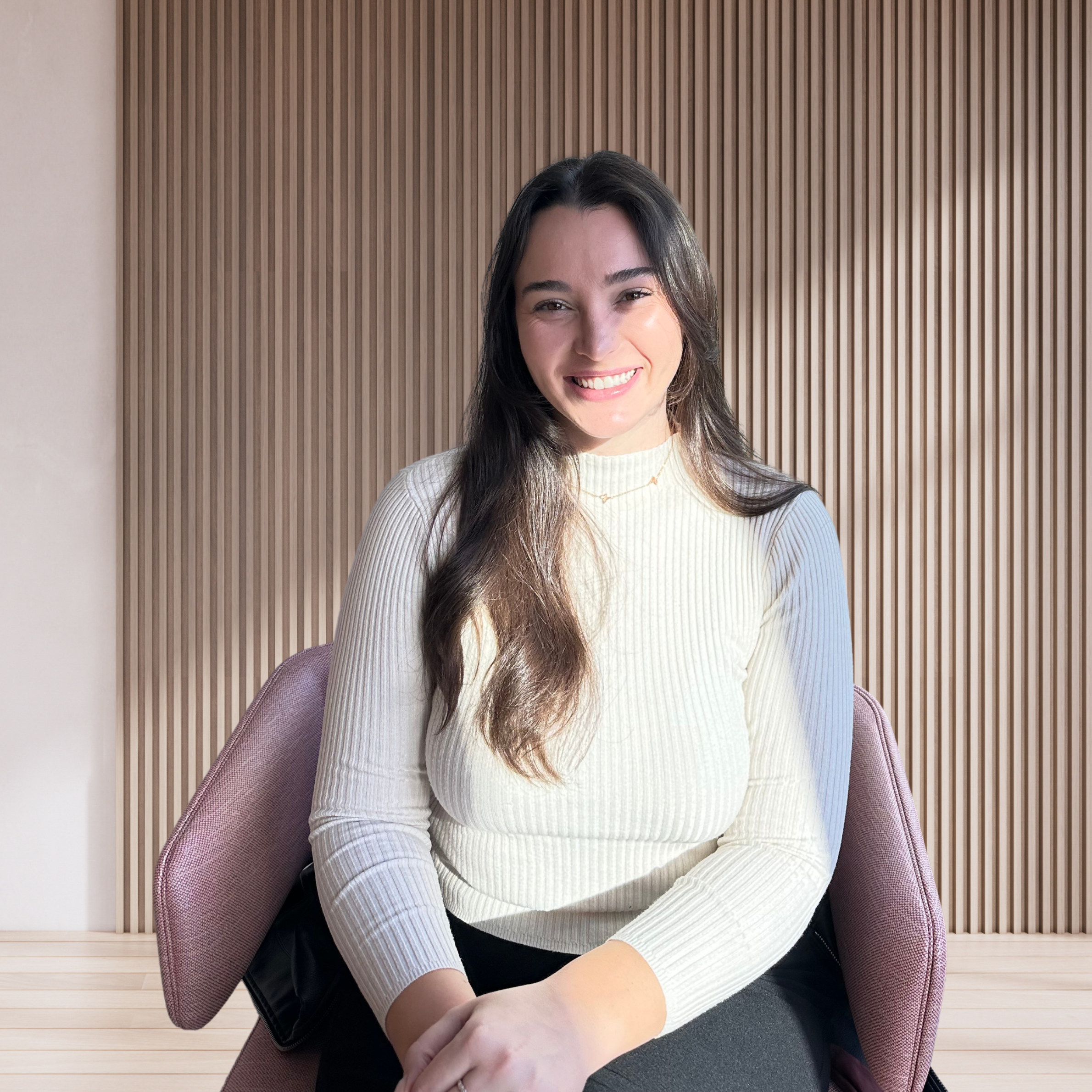
Therapist, Facilitator & Co-Founder
Spent a decade in corporate. Still recovering. Building something better.
Isabel Burton

Therapist, Facilitator & Co-Founder
Worked with some of the world's biggest storytellers. Now the story is this.
Shannon Frost
We bring psychology training, PACFA-registered counselling practice, and 20 years of corporate experience combined.
We’re a registered charity
Caring for the people who care for people.
A share of every program we run funds counsellor-led groups for frontline and community workers in Sydney. When you book 3RDSPACE, you’re backing them too.
The most powerful tool for human wellbeing isn't an app, a podcast, a pulse survey, or a mental health day:
It's other people.
We bring structured group connection inside the spaces you already have because the most connected communities aren’t accidental…
they’re structured.